How to Become a UFC Fighter: The Real Path to a Contract
You turn pro on the regionals, win, and get a UFC deal through the Contender Series, TUF, Road to UFC or a short-notice call, usually after about five years.
You become a UFC fighter by building an amateur record, turning pro on the regional circuit, winning enough that the UFC matchmakers notice, and then cashing in one of four doors: Dana White's Contender Series, The Ultimate Fighter, Road to UFC, or a short-notice phone call. Nearly a third of the roster came through the first one.
There is no application form and no open tryout. Mick Maynard and Sean Shelby, the two matchmakers, scout regional shows, talk to managers, and decide who gets a slot. Your job is to make that decision easy: win, finish people, never miss weight.
The money on the way up is bad. The hoops are real. The timeline is years, not months. Here is the whole path, with actual numbers.
- Entry-level UFC deal
- $10,000 to show, $10,000 to win
- Short-notice debut deal
- $12,000 to show, $12,000 to win
- Compliance pay, 1-3 bouts
- $4,000 per fight
- DWCS Season 1 purse
- $5,000 show, $5,000 win bonus
- DWCS contracts since 2017
- 332 (Dana White, Aug. 2026)
- Nevada pro license fee
- $50 plus medicals
How Many Amateur Fights Do You Need Before Going Pro?

No commission we could find sets a number. Edmonton's combative sports commission, which publishes its pro-debut policy, requires no minimum amateur record at all. If you have no amateur fights, it wants proof of at least six months of training, three days a week, under a recognized coach. Most good coaches want far more than that: call it 5 to 10 amateur fights.
IMMAF runs the organized version of amateur MMA, with national federations and world championships, and its rules define what amateur means. One professional MMA bout makes you a pro, as does a published pro record or a contracted purse. Since 2025, fighting under rules that allow elbows or knees to the head also costs you amateur status. IMMAF encourages bigger gloves and shin guards, seniors must be 18 or older, and amateurs can still take sponsorships and up to $1,000 in promoter-paid expenses.
Turn pro when you are winning comfortably. Every pro loss lives forever on Sherdog, and matchmakers read Sherdog.
Which Regional Promotions Feed the UFC, and What Do They Pay?
LFA in the United States, Cage Warriors in Europe, Oktagon in Central Europe, Fury FC and CFFC stateside: these are the feeder leagues. Mick Maynard ran Legacy FC, the Texas promotion that merged into LFA, before the UFC hired him in 2016 to replace Joe Silva.
The pay is grim. Manager Daniel Rubenstein described a typical regional purse to Yahoo Sports as "$2,250 and he's got to pay his own medicals." He added that a Contender Series purse is "probably more than double" what most of those fighters make anywhere else, which puts a lot of regional checks in the low four figures or worse. You are buying a record and tape, not a living.
Pick a gym with pros already on the UFC roster, because that is how your name reaches a matchmaker. Get a manager once you have something to sell. A manager with clients in the UFC can get you a Contender Series slot. One who does not is mostly a tax.
How Does Dana White's Contender Series Work?
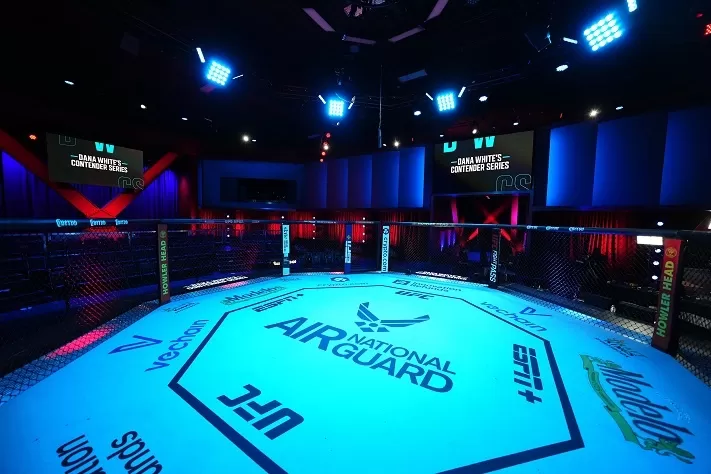
The Contender Series runs on Tuesdays from August to October at the Apex in Las Vegas, five fights a week for ten weeks. Winning is required but not sufficient. Dana White sits cageside and hands contracts to fighters who win the way he likes, which usually means a finish. His own words, per Yahoo: "I don't care what you did before," and "show me right here, right now who you are."
The pay started tiny. When the Nevada Athletic Commission released Season 1 salaries in July 2017, Sherdog reported every fighter got a $5,000 show purse and winners got a $5,000 bonus.
The contract count keeps climbing. Season 9 in 2025 awarded a record-tying 46 contracts, per ESPN. Season 10, wrapping up this month, had handed out 38 through eight weeks, per Cageside Press. In August 2026, Dana White said 332 contracts have gone out since 2017 and alumni have earned $225.3 million in the UFC. Lose on the show and regional promoters may not take you back; King of the Cage's Terry Trebilcock told Yahoo, "We don't usually pick guys up like that."
Is The Ultimate Fighter Still a Path to the UFC?
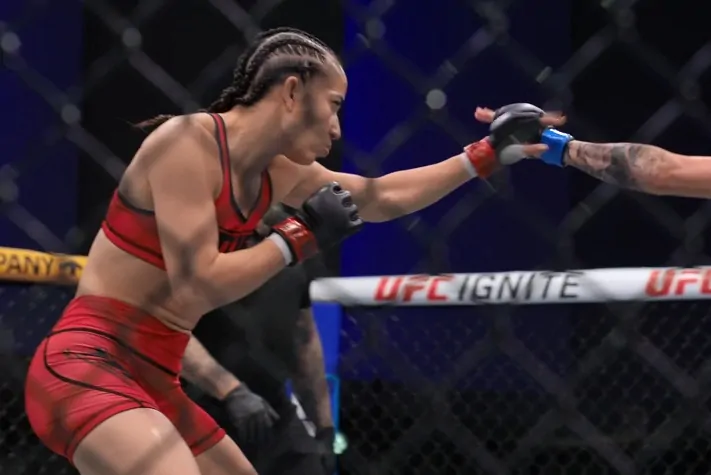
Yes, and it is the only door you can actually apply for. The Ultimate Fighter 34, with Daniel Cormier and Michael Bisping coaching bantamweights and women's strawweights, premiered June 14, 2026 on Paramount+ with 16 fighters on two teams. Casting was fully remote: a downloadable application at ufc.ac/tufapplication, open March 2 to March 27, 2026, no physical tryouts.
The catch is the format: 12 episodes, coaches picking your fights, cuts, and a season of television between you and a contract. Take the Contender Series if you can get it. TUF is a legitimate second ticket.
What Is Road to UFC?

Road to UFC is the Asian pipeline: win-and-advance tournaments in each division, quarterfinals over two days, semifinals a few months later, and the winner of each bracket gets a UFC contract. Season 4 ended January 31, 2026 at UFC 325 in Sydney, where Dom Mar Fan beat Sangwook Kim by decision for his deal. Season 5 opened in Macau on May 28 and 29, 2026, ran semifinals in Shanghai on August 28 in four divisions (featherweight, bantamweight, strawweight and flyweight), and the finals are set for early next year.
Can You Get Signed on Short Notice?
The oldest route still works: somebody pulls out, the matchmakers need a licensed body in your weight class with a clean record, and your manager picks up the phone. Ilia Topuria is the modern proof. He was 8-0 and had not fought in 11 months when he took a UFC debut against Youssef Zalal on eight days' notice in October 2020, at 23.
Short-notice debuts even pay better. In exchanges reported by Cageside Press in January 2026, Maynard said the $12,000-to-show, $12,000-to-win contract is specifically for fighters who debut on short notice. Everybody else starts at $10,000 and $10,000.
How Much Does a New UFC Fighter Actually Make?
The standard entry-level deal is $10,000 to show and $10,000 to win, a figure Cageside Press traced through commission disclosures back to 2016. It was $8,000 and $8,000 in 2014. Contracts are usually four fights.
On top of that comes Promotional Guidelines Compliance pay, the money for wearing the uniform and doing media. MMA Junkie's published 2025 tiers: $4,000 per fight for 1 to 3 UFC bouts, $4,500 for 4 to 5, $6,000 for 6 to 10, $11,000 for 11 to 15, $16,000 for 16 to 20, $21,000 for 21 or more, $32,000 for title challengers and $42,000 for champions. A $50,000 performance bonus is what actually changes a debutant's year: Joo Sang Yoo took one for a prelim finish in his debut at UFC 316 in June 2025.
So a debut win pays about $24,000 before taxes, management, coaches and camp. That is why so many UFC fighters still work day jobs.
What Licensing and Drug Testing Do UFC Fighters Need?
Every fight needs a license from the state or national commission. Nevada's professional contestant license costs $50, but the medicals are the real bill: HIV, Hepatitis B and Hepatitis C blood work within 30 days, a complete blood count, a dilated eye exam by an ophthalmologist, a brain MRI every five years plus a one-time MRA, and a physical.
Once you sign, you are in the anti-doping pool. Since 2024 the UFC's program has been run by Combat Sports Anti-Doping, with Drug Free Sport International collecting samples. Every contracted UFC athlete is enrolled, and testing is no-notice, 24/7/365, anywhere in the world. Miss tests and you sit: Conor McGregor accepted an 18-month ban in October 2025 for three whereabouts failures in 2024.
How Long Does It Take? Real Paths to a UFC Belt
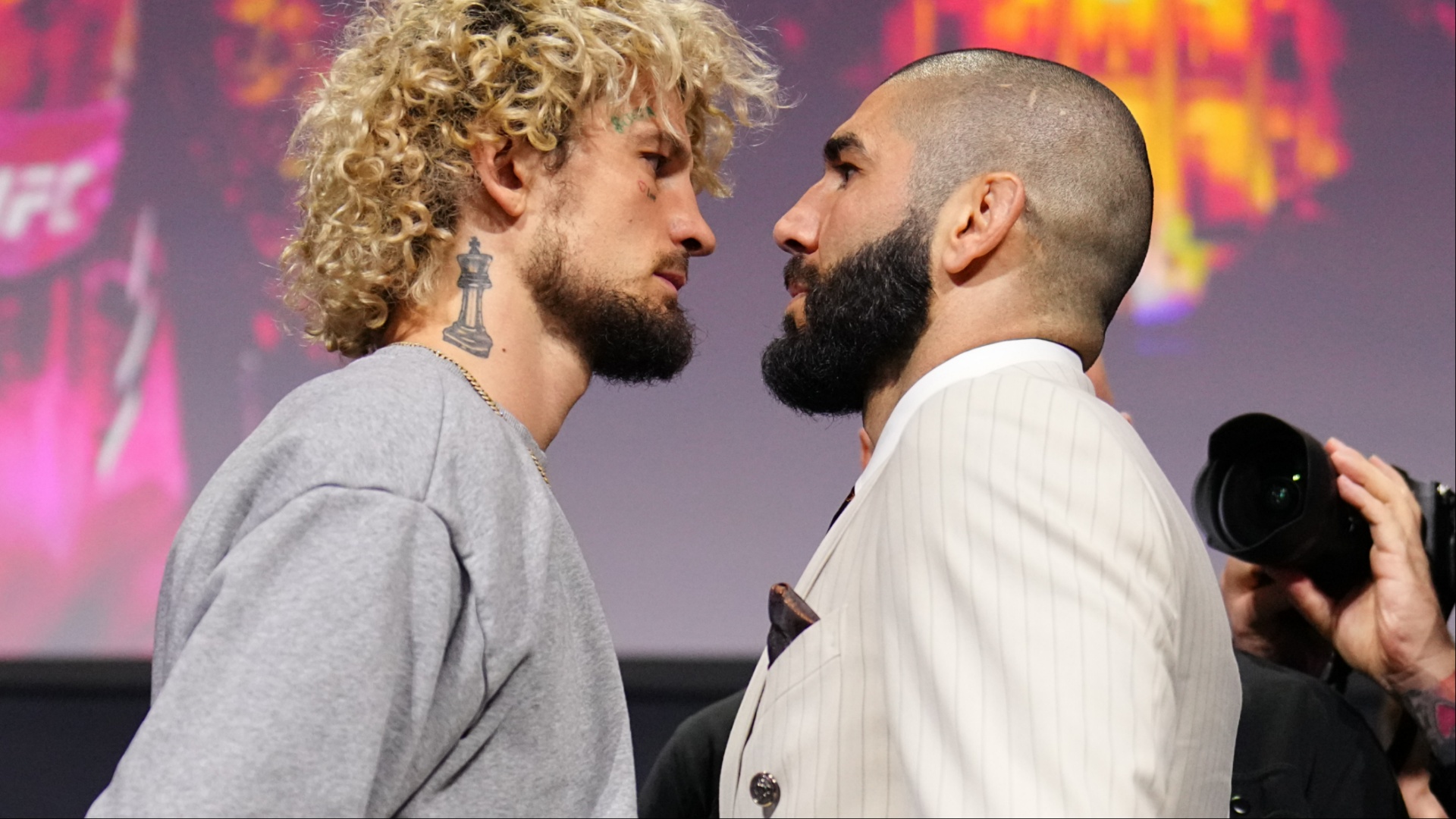
Sean O'Malley turned pro in 2015, knocked out Alfred Khashakyan on the Contender Series on July 18, 2017, debuted at the TUF 26 Finale that December, and stopped Aljamain Sterling for the bantamweight title at UFC 292 on August 19, 2023. Eight years from pro debut to belt.
Jamahal Hill stopped Alexander Poppeck on the Contender Series on July 23, 2019, debuted in the UFC on January 25, 2020, and beat Glover Teixeira for the light heavyweight title at UFC 283 on January 21, 2023. Three and a half years from the Contender Series to a belt.
Ilia Topuria took the regional road: pro debut at Mix Fight Events in Valencia in April 2015, a Cage Warriors title fight in Antwerp in June 2018 (he won but missed weight, so no belt), a Brave CF deal in 2019, then the short-notice UFC debut in 2020. He went on to hold the featherweight and lightweight titles before Justin Gaethje stopped him at UFC Freedom 250 in June 2026.
The pattern: pro debut around 18 to 22, UFC call in your mid-twenties, title shot near 30 if you are elite. Budget five years of poverty for a shot at the roster. Then the real work starts.
I love the Contender Series as television and I distrust it as a career plan. Dana White has handed out 332 contracts since 2017, and he openly says he does not care what you did before. That is a casting call, not a scouting system, and it rewards guys who swing for a finish over guys who are actually hard to beat. Meanwhile the kid who wins is signed at $10,000 and $10,000, plus $4,000 in uniform money, for a four-fight deal that can end after one bad night. The real lesson of Sean O'Malley, Jamahal Hill and Ilia Topuria is not the show. It is that each spent years grinding regional cards for a couple grand and their own medicals before anyone in Las Vegas learned their names. If you are 19 and reading this, go get your amateur fights. The Apex can wait.
QUESTIONS PEOPLE ASK.
How many amateur fights do you need before turning pro in MMA?
There is no legal minimum in most places. Edmonton's commission, one of the few that publishes a pro-debut policy, requires no amateur record at all, only proof of six months of training with a recognized coach. In practice most serious coaches want 5 to 10 amateur fights so you have film, a real record, and no bad habits that a pro will punish. Turn pro when you are winning comfortably, not when you are impatient.
How much do Contender Series fighters get paid?
When Nevada released the Season 1 salaries in July 2017, every fighter earned a $5,000 show purse and winners received a $5,000 bonus, so a win paid $10,000. Manager Daniel Rubenstein told Yahoo Sports in 2024 that a Contender Series check is still probably more than double what most of those fighters make on regional cards. Fighters who earn a contract typically start on the standard $10,000 to show and $10,000 to win UFC deal.
How many UFC contracts does the Contender Series give out each season?
The number has grown nearly every year. Season 9 in 2025 awarded a record-tying 46 contracts across ten weeks, and Season 10 had already handed out 38 through its first eight weeks in October 2026. Dana White said in August 2026 that 332 contracts have been awarded since the show began in 2017. Five fights air each Tuesday, and it is common for all five winners to be signed on a strong night.
How much does a UFC fighter make in their first fight?
The standard entry-level contract is $10,000 to show and $10,000 to win, or $12,000 and $12,000 if you debut on short notice. On top of that, Promotional Guidelines Compliance pay starts at $4,000 per fight for fighters with one to three UFC bouts. A debut win therefore pays around $24,000 before taxes, management fees and camp costs. A $50,000 performance bonus is the one thing that meaningfully changes that math.
Can you apply to be a UFC fighter?
Not directly. The UFC has no open tryouts, and matchmakers Mick Maynard and Sean Shelby scout regional shows and work through managers. The one route with an actual application is The Ultimate Fighter, which cast its 2026 season remotely through a downloadable form. Road to UFC runs tournaments for fighters based in Asia. For everyone else, the path is a strong regional record, a connected gym and manager, and a Contender Series slot.
- Sherdog: Dana White's Tuesday Night Contender Series Salaries
- Yahoo Sports: One fight away: the brutal gauntlet of Dana White's Contender Series
- Cageside Press: Discrepancy in Pay for UFC Newcomers Revealed
- MMA Junkie via Yahoo: UFC 312 Promotional Guidelines Compliance pay
- UFC.com: Week 10 Results, Dana White's Contender Series Season 9
- Cageside Press: Dana White's Contender Series Season 10, Week 9 Weigh-In Results
- SI: Dana White Reveals DWCS Winners' UFC Earnings Since 2017
- IMMAF: Athlete Eligibility
- Nevada State Athletic Commission: Professional Contestant Licensing
- UFC.com: Ilia Topuria's Unbeaten Road to the White House
Figures in this piece come from the sources above; purses, deals and net worth totals are estimates unless a commission or the fighter disclosed them. Spotted an error? Send a correction.